


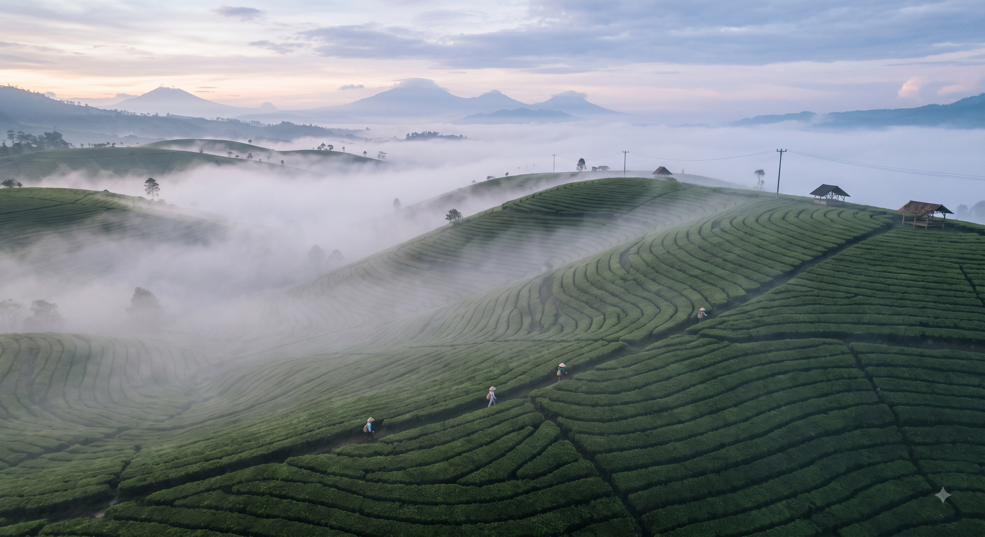
IJO is an Indonesian agri-biotech company that makes GROOW™, a liquid biostimulant fermented from Indonesian seaweed and blended with a living microbial consortium. IJO does not sell a fixed blend — each formulation is built for one crop, one soil and one agreed target, then deployed with a dosing calendar and an agronomist for the whole season. GROOW™ is a biostimulant, not a pesticide.
- What a biostimulant is
- A substance applied to a plant or soil to improve nutrient uptake, efficiency and stress tolerance. It is not a fertiliser — it does not supply the nutrients, it improves what the plant does with them.
- Crops with an existing programme
- Corn, rice, chili, sweet potato, coffee, melon, onion, potato and oil palm.
- Where
- West Java (Padalarang, Sukabumi, Bogor), Aceh Tamiang and Sumbawa, Indonesia.
Why good inputs lose
Nobody was ever fired for buying urea.
That is the actual competitor. Not price, not distribution — the fact that switching inputs is a decision where the upside is a better season and the downside is explaining a failed one to your board, your co-op, or your family.
So we do not ask anyone to switch. We ask for one block, for one cycle, with your existing practice standing right next to it as the control. If we are wrong, you lose one block and you have learned something about your soil. If we are right, you have the evidence in your own hand — not ours.
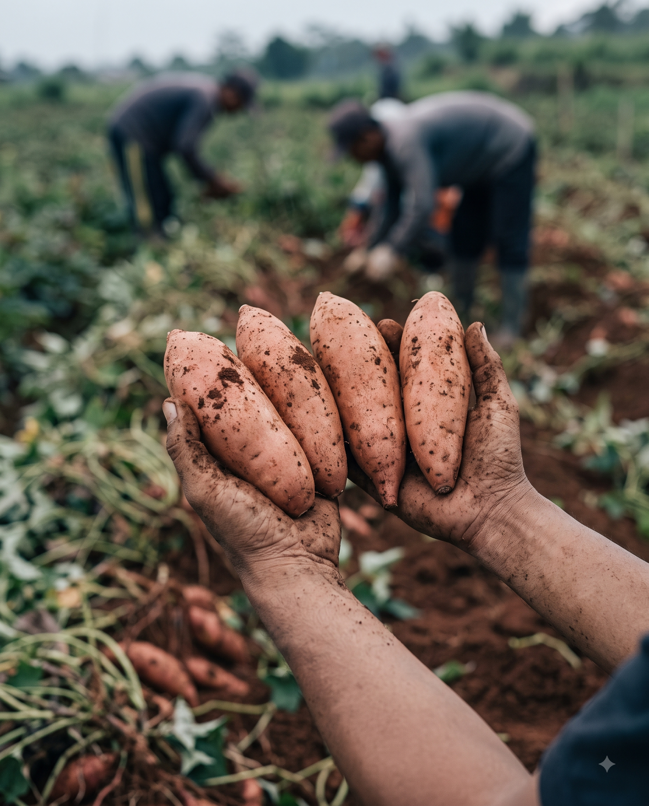
The problem, in public numbers
Most fertiliser damage happens after it reaches the field.
Nitrogen-use efficiency — getting more crop out of less input — is identified as the single most effective lever on those emissions. That is a soil and agronomy problem before it is a chemistry problem, and it is the problem we work on.
Why seaweed
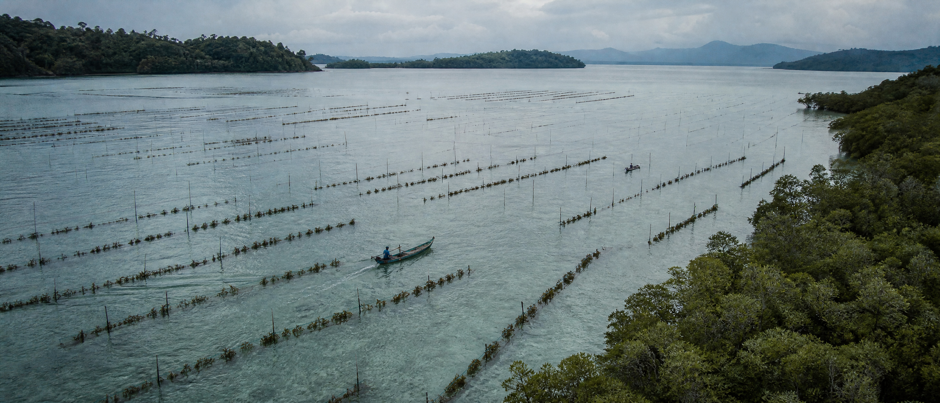
Why seaweed? No land, no fresh water, no fertiliser to grow the input itself.
“The soil is the great connector of lives.”
— Wendell Berry
Social Media